The Epistemic Limits of Classical CQB Training and Their Expansion Through Dynamic Shooting
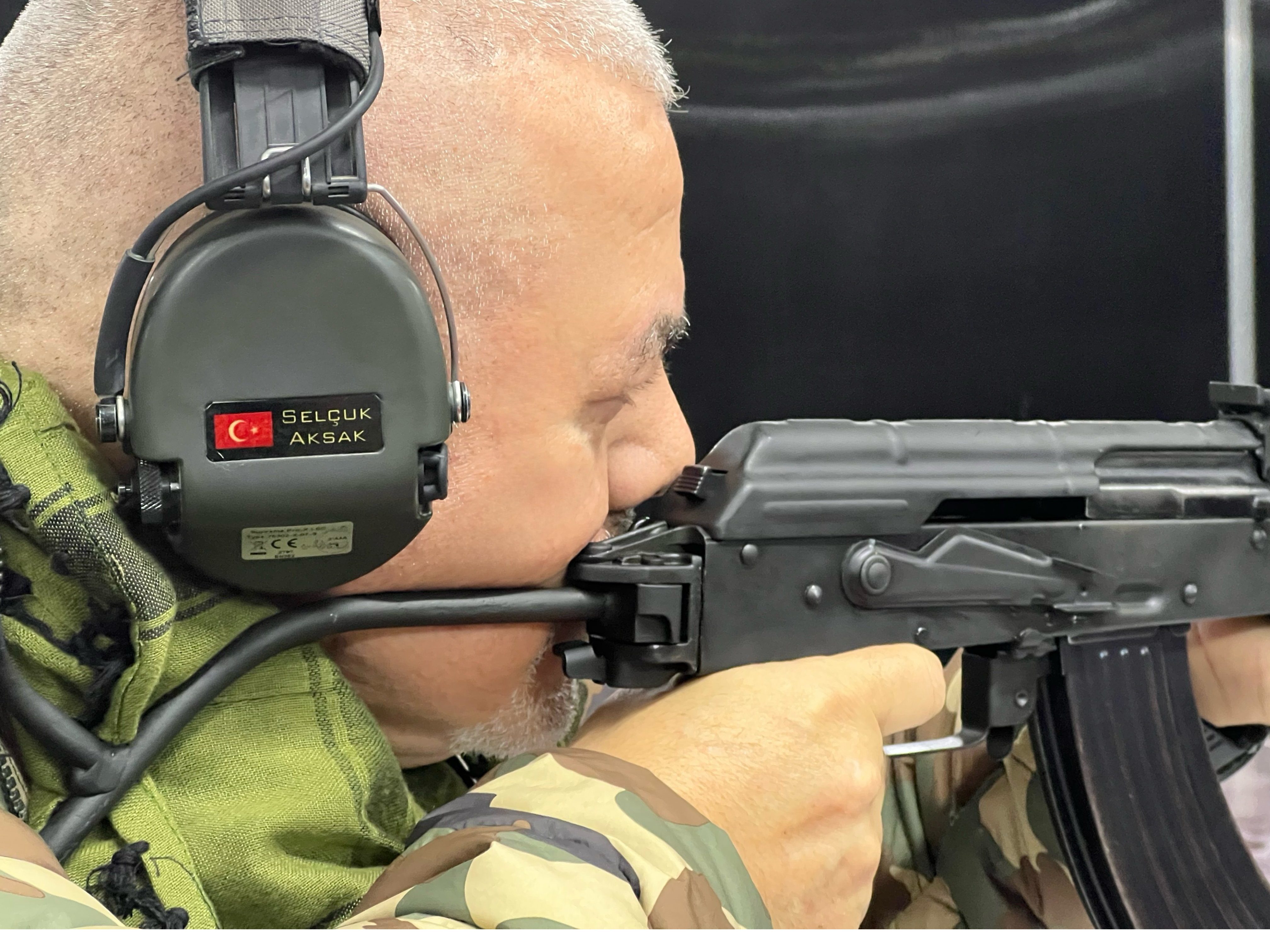

An operator acquires discipline, procedural accuracy, and high levels of coordination through classical Close Quarters Battle (CQB) training. These training frameworks constitute an indispensable foundation, particularly in terms of safety and coordinated team movement. However, these competencies are largely shaped within the predefined boundaries of the training environment. This structure where threats are clearly defined, solution pathways are framed by doctrine, and tolerance for error is minimized enhances accuracy while simultaneously narrowing the contextual scope of learning.

This condition gives rise to a closed epistemic loop within the operator. High performance achieved through repeated scenarios gradually begins to be perceived as a context independent competence. In reality, however, such performance is often specific to the environment in which it was developed. This misperception is defined in the literature as the “illusion of competence” and makes it difficult for individuals to recognize their own cognitive limitations.
The critical inflection point here lies in the balance between accuracy and variation. While CQB training maximizes accuracy, it maintains variation at a limited level. As a result, the operator’s exposure to alternative perceptual and decision pathways is reduced. Consequently, while the individual becomes highly proficient at producing the correct solution, their capacity to recognize and evaluate alternative solutions does not develop to the same extent. Yet real operational environments are high variation systems shaped by incomplete information, conflicting signals, and time pressure.

Within this context, epistemic divergence becomes inevitable. Operators present in the same environment interpret the situation differently due to variations in positioning and perceptual frames. What emerges is not a single “reality,” but multiple parallel operational realities. Each of these perceptions, internally coherent in itself, naturally leads to divergent decisions in the field.
The classical CQB approach aims to minimize this divergence. Through standardized procedures, a unified behavioral model is established. While this approach produces high reliability for certain mission types, it may simultaneously limit adaptability in out of context situations. This is because the problem is often not the absence of a procedure, but the uncertainty regarding how well the current situation aligns with existing procedures..
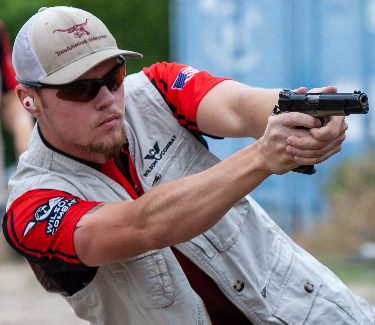
At this point, the discipline of dynamic shooting offers a fundamentally different learning architecture. Rather than suppressing epistemic divergence, it renders it visible and places it at the center of learning. The solutions generated by different shooters on the same stage dismantle the notion of a singular “correct” answer and reposition decision-making onto a comparative basis. In doing so, the individual evolves from a mere executor into an adaptive decision maker capable of selecting actions according to context.
This process produces a form of collective cognitive expansion within the squad structure. Through observation, comparison, and mental simulation, learning is no longer confined to individual experience; the experiences of others are integrated into the decision model. As a result, the capacity for vicarious learning increases significantly, and the decision making process becomes more flexible..
In this framework, dynamic shooting should not be considered an alternative to classical CQB training, but rather as a complementary layer that expands its epistemic boundaries. CQB provides structure and discipline; dynamic shooting enables this structure to be reinterpreted under varying conditions. In other words, CQB teaches how to act, whereas dynamic shooting develops the ability to discern which choice is more appropriate under specific circumstances.
Narrowing, Dilemma, and Adaptive Selection Mechanisms in Decision-Making

In operational environments, decision-making is often characterized not by an increase in options, but rather by their rapid reduction. Under time pressure, cognitive load, and sensory constraints, the operator does not behave as a fully rational actor evaluating all possible alternatives. Instead, they gravitate toward a limited set of actionable options that allow for rapid interpretation of the situation. This process is closely associated with the experience based pattern recognition mechanism defined in the literature as recognition primed decision making.
Classical CQB training pre-structures this narrowed decision space. Operators learn specific responses to specific situations, and over time these pairings become automated. This approach provides a significant advantage, particularly in high risk environments with low tolerance for error. However, to the extent that it limits the formation of alternative decision pathways, it confines the operator within a decision model that converges toward a single “correct” solution.
At this point, the concept of dilemma becomes salient. In the field, the operator is often not choosing between two correct options, but between two incomplete ones. None of the available options fully correspond to the situation. Under such conditions, decision-making evolves from a search for optimal correctness toward a process of satisficing selecting what is sufficiently appropriate.
Classical training models can only simulate such incomplete solution states to a limited extent, as training environments inherently attempt to control uncertainty. In contrast, in real operational contexts, uncertainty is not an element to be eliminated but a fundamental component of the decision making process.
The discipline of dynamic shooting introduces a different cognitive domain at this point. Under stage design constraints and time pressure, the shooter is never presented with a “perfect solution.” Every solution entails a specific risk and a specific reward. The shooter must establish this balance based on their own perception, experience, and priorities. Consequently, decision-making shifts from reliance on singular truths to the ability to balance variables.
This transformation removes decision making from a deterministic structure and places it within a probabilistic framework. The operator is no longer merely one who applies what is “correct,” but one who evaluates options under uncertainty, assesses risks, and assumes responsibility for outcomes. This transformation provides a critical advantage, particularly in environments characterized by high tempo and incomplete information.
In this sense, dynamic shooting does not merely enhance speed or accuracy; it fundamentally alters the nature of decision making itself. The operator becomes more conscious in managing pre-action cognitive narrowing processes, evaluates alternatives more rapidly, and can abandon habitual solution patterns when necessary. Thus, the operator becomes not only fast, but context-sensitive in their decisions.
A Neuromotor Reinterpretation of the OODA Loop: Continuity from Perception to Action

Operational decision-making is often described as a linear sequence: observe, orient, decide, and act. However, the reality in the field reflects not a sequential model, but an intertwined, continuously flowing cognitive motor cycle. When properly interpreted, the OODA (Observe Orient Decide Act) framework represents not a chain of successive steps, but a system operating simultaneously and continuously updated through feedback.
Within this system, “observation” is not merely the passive collection of data from the external world; it is an active selection process shaped by the operator’s prior experiences, expectations, and attentional filters. In other words, the operator does not perceive what is present as it is, but rather what they are prepared to perceive. This demonstrates that perception is not passive, but guided.
The “orientation” phase is often overlooked, yet it represents the most critical layer. Here, information is not only processed but also interpreted and assigned meaning. The operator’s cultural background, training history, stress level, and immediate physiological state directly influence this meaning making process. This explains why two operators exposed to the same input may arrive at different decisions.
Classical CQB training attempts to standardize this orientation layer to the greatest extent possible. The objective is to ensure that different individuals interpret the same situation in similar ways. While this increases team cohesion, it may simultaneously limit diversity in perception and interpretation.
In contrast, dynamic shooting expands rather than stabilizes the orientation layer. The shooter is exposed to varying angles, risks, and time pressures in each stage.
This variability prevents perception from operating through a single filter and renders the orientation process more flexible. As a result, the operator develops not only speed in decision-making but also the capacity to generate different meanings across different contexts.

At this point, the boundary between decision and action becomes blurred. Neuromotor research demonstrates that decision making is often not completed prior to action; rather, it continues to be updated during execution. Motor planning and execution progress in parallel with cognitive processes. Thus, what the operator actually does is not “decide and then act,” but continuously revise decisions while acting.
Dynamic shooting directly reinforces this continuously updating decision action loop. Target engagement while moving, trigger control during positional transitions, and decisions made under time pressure all strengthen the integration between decision-making and motor execution. This integration is not a reflex automatized through repetition, but a flexible, context-sensitive control mechanism.
In this context, OODA ceases to be a static model and becomes an adaptive mechanism continuously operating within the operator’s nervous system. Perception, decision, and movement are not separate processes, but different manifestations of the same system. Mastery, therefore, lies not in accelerating these processes individually, but in integrating them to the point where transitions between them become invisible.
Subconscious Competence and Nervous System Adaptation: Learning Beyond Repetition

Operational mastery is often conceptualized as a function of repetition. It is assumed that increased repetition leads to improved performance. However, while this approach may increase the quantity of learning, it does not necessarily transform its quality. The nervous system does not retain only what is repeated, but what is interpreted and tested across varying contexts.
The level of mastery defined as subconscious competence is not merely a collection of automated movements. It refers to the operator’s ability to execute actions without conscious effort; however, this automation is not the result of mechanical repetition, but of highly organized neuromotor integration.
The biological foundation of this integration lies in myelination processes, which increase neural transmission speed and coordination accuracy. Repeated movements lead to the thickening of the myelin sheath surrounding neural pathways, enabling faster and more reliable signal transmission. However, the critical point is that the nervous system strengthens not only correct repetitions, but any repeated pattern.
Thus, low-variation, single-solution-oriented training may produce neural structures that perform well within a specific context but become fragile when that context changes. The operator becomes fast, but not flexible; precise, but closed to alternatives.
Dynamic shooting alters the direction of nervous system adaptation. Repeating the same skills under different contextual conditions allows the nervous system to learn not just the movement itself, but the underlying principles governing that movement.
Learning thus moves beyond superficial automation and gains deep adaptability.
In this process, the operator does not perform the exact same movement each time, but solves similar problems under different conditions. This aligns with the concept of variable practice in motor learning, which has been shown to enhance transfer capacity.
At this point, subconscious competence acquires a new meaning. The objective is no longer merely to perform the correct action without thinking, but to select the correct action without conscious deliberation. The operator does not consciously analyze the situation, because this analysis has already been structured within the nervous system through exposure to multiple variations.
Performance under stress must also be reconsidered within this framework. Classical approaches suggest that stress reduces performance or causes regression to automated behaviors. However, if automation is based on low variation and narrow context learning, such regression is often insufficient. The operator attempts to apply familiar solutions to unfamiliar situations.

Dynamic shooting based learning produces a different outcome under stress. Because the nervous system has learned not a single solution, but the mechanism of generating solutions, stress can act not as a limiting factor but as a trigger for faster selection among available options.
In this sense, mastery cannot be measured solely by speed or accuracy. The defining factor is the operator’s capacity to generate new solutions under variable conditions while maintaining correct principles.
Subconscious competence is therefore not an endpoint, but a continuously updated, context-sensitive adaptive capability.
Conclusion: A Training Doctrine Between Structured Discipline and Adaptive Cognition
Modern operational training has long been built upon structured models that maximize accuracy. This approach is indispensable in high risk, low error tolerance environments such as CQB. Standard procedures, a shared language of action, and disciplined execution produce reliability, minimize error, and ensure team cohesion. However, by its very nature, this structure also imposes contextual limits on learning.
Real operational environments, however, exist beyond these limits. Uncertainty, incomplete information, and conflicting signals render decision-making non linear and force the operator into continuous reassessment. Therefore, operational mastery should not be defined solely by the ability to execute correct procedures, but by the capacity to discern the extent to which a given situation aligns with those procedures.
In this regard, dynamic shooting emerges not as an alternative to classical training models, but as a complementary and expanding layer. It constructs learning not around fixed truths, but around variable contexts and multiple solution pathways. This approach enables the operator not merely to repeat what is correct, but to regenerate correctness according to context.
The resulting structure is a synthesis of two paradigms:On one side, structured CQB training that produces procedural accuracy and discipline;on the other, dynamic shooting that develops adaptive decision-making mechanisms under uncertainty.
This synthesis does not position the operator between two extremes; rather, it integrates both approaches within a single cognitive system. The operator becomes not merely an executor of fast and accurate actions, but a system capable of managing perception, evaluating options, and producing context-appropriate decisions.
The proposed training doctrine, therefore, is not based on choosing between accuracy and adaptation, but on developing both capacities simultaneously. Because superiority in the field arises not only from flawless execution, but from the ability to redefine what is “correct” under changing conditions.
Ultimately, the issue is not merely teaching the operator what is correct. The real objective is to ensure that the operator possesses a cognitive and neuromotor structure capable of discerning what can be correct under evolving conditions. Once this structure is established, training ceases to be a process of repetition and becomes a continuously self updating system of adaptation.
Author
Dr. Selçuk Aksak
Shooting Sport Instructor & Coach
IDPA CSO, Gunsmith
Burkut Academy
References;
Anderson, J. R. (1982). Acquisition of cognitive skill. Psychological Review.
Bandura, A. (1977). Social Learning Theory.
Boyd, J. (1995). The Essence of Winning and Losing.
Coyle, D. (2009). The Talent Code.
Davids, K., Button, C., & Bennett, S. (2008). Dynamics of Skill Acquisition.
Endsley, M. (1995). Toward a theory of situation awareness.
Ericsson, K. A. (2006). The Cambridge Handbook of Expertise.
Hollnagel, E. (2009). The ETTO Principle.
Kahneman, D. (2011). Thinking, Fast and Slow.
Klein, G. (1998). Sources of Power.
Salas, E. et al. (2012). Team training research.
Schmidt, R. A., & Lee, T. (2011). Motor Learning and Performance.
Simon, H. A. (1956). Rational choice and bounded rationality.
Wolpert, D. et al. (2011). Principles of sensorimotor learning.


Comments