THE LIMITS OF TRAINING, THE REALITY OF ENGAGEMENT:Cognitive Flexibility and the Boundaries of Scenario-Based Training in Operational Environments
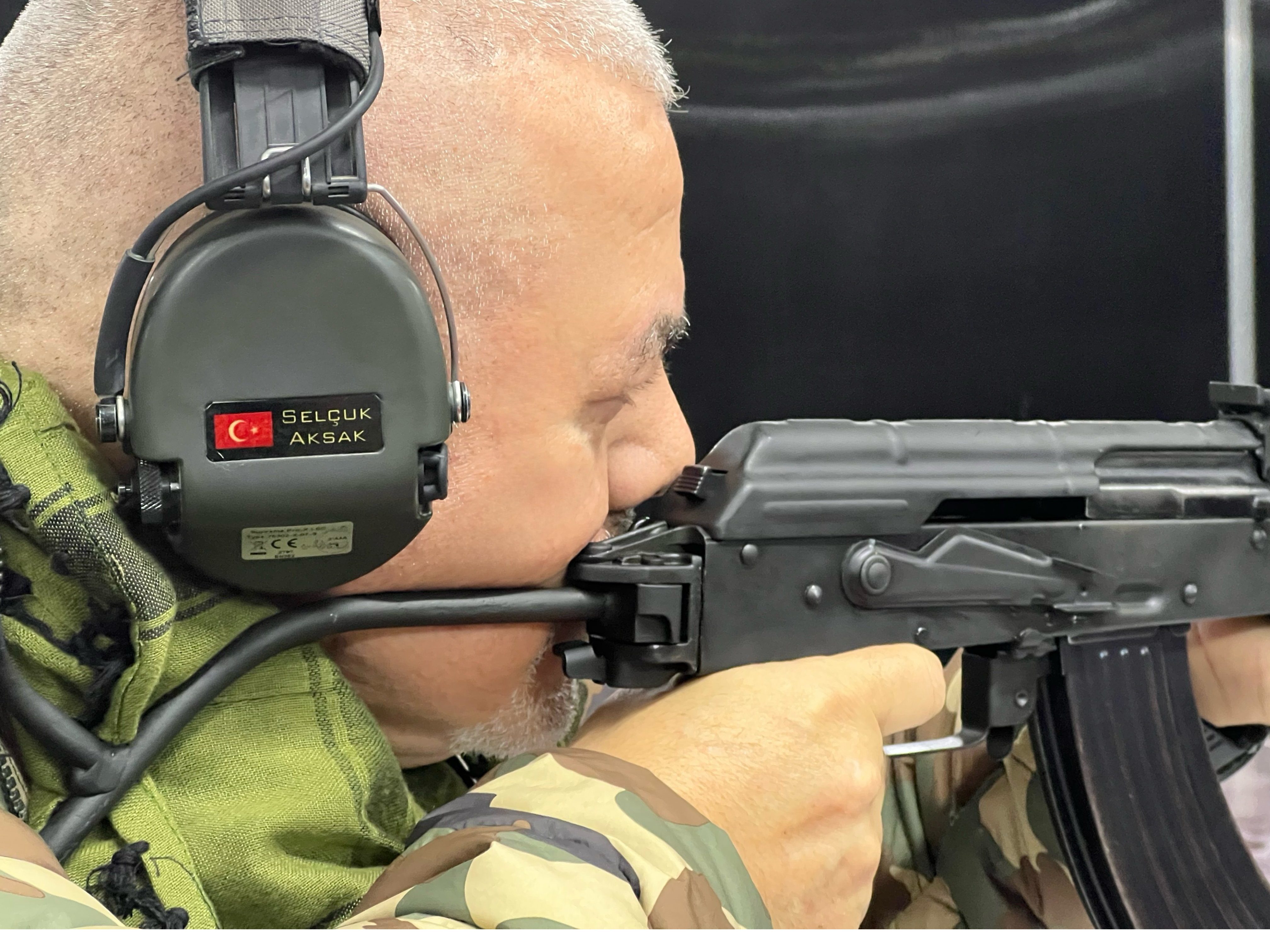

Author's Note: While grounded in academic literature, this paper intentionally pairs theoretical constructs with field-based examples and concrete illustrations. The aim is to ensure that both researchers and practitioners derive equal value from the same text.
ABSTRACT
The prevailing assumption in operational training holds that pre-planned scenarios safeguard field performance. This paper argues that such an assumption is neuroscientifically, physiologically, and operationally inadequate. The failure of scenario-based training to transfer to real-world conditions is examined through Siddle and Grossman's stress physiology research, Davids and Araújo's Constraints-Led Approach (CLA), and Klein's Recognition-Primed Decision (RPD) model. Shooting sports are employed as a laboratory context in which human performance under high stress is most measurably observable.
Keywords: cognitive flexibility, scenario-based training, training scars, Constraints-Led Approach (CLA), Recognition-Primed Decision (RPD), command paralysis, stress physiology
1. INTRODUCTION: THE ANATOMY OF UNPLANNED

In 1986, FBI agents intervened to stop a bank robbery in Miami, Florida. The agents involved carried exemplary range records technically proficient, well-trained marksmen. In the field, however, two agents were killed and five wounded by a two-man team of robbers. The subsequent investigation raised an uncomfortable question: these officers performed correctly at the range why did performance collapse when it mattered most?
This is not an isolated case. Grossman and Christensen (2004), in On Combat, document a systematic paradox drawn from real engagements: procedures meticulously trained in controlled settings either disappear entirely under high stress or resurface in unintended forms.

For decades, police officers trained with revolvers on the range. After firing, spent casings fell to the ground and collecting them was a mandatory post-drill cleanup procedure, repeated hundreds of times. In actual engagements, when revolvers ran empty, officers unconsciously collected the casings and placed them in their pockets. Some reported finding casings there after the incident with no memory of doing so. More critically, some officers were found dead having collected their casings mid engagement reloading their weapon secondary to an ingrained procedural reflex.
This paper asks one question: How does a correctly trained behavior become an involuntary liability in actual engagement? The answer lies in a fundamental incompatibility between dominant training paradigms and the physiological and cognitive architecture of the human brain under threat. Shooting provides the ideal laboratory for this inquiry: feedback is immediate, errors cannot be concealed, and stress is measurable. The implications extend across the full spectrum of law enforcement and military operational training.
2. THE PHYSIOLOGY OF STRESS: WHY THE BODY FAILS WHEN IT IS NEEDED MOST

Instructor and student during weapons handling practice: the training context cannot replicate the operational context.
2.1 Heart Rate and the Performance Curve

Siddle (1995) and Grossman (2004) have comprehensively documented the effect of stress-induced heart rate elevation on motor performance. The result is counterintuitive: performance initially rises with increasing arousal before collapsing dramatically.
The 115-145 BPM range constitutes the optimal zone, within which complex motor skills, visual processing, and cognitive reaction time peak. Beyond 115 BPM, fine motor control begins to deteriorate. Above 145 BPM, cognitive processing capacity declines and perceptual narrowing tunnel vision emerges. Above 175 BPM, only basic survival reflexes remain operational; the brain enters fight-or-flight mode and complex decision-making is effectively disabled.
A critical distinction must be noted: these effects occur specifically under stress-induced adrenally driven heart rate elevation. Achieving the same heart rate through physical exercise does not produce the same cognitive degradation. The brain differentiates between exertional stress and survival stress and responds to each differently. This explains why physical conditioning on the range, in isolation, is insufficient preparation for operational performance.
2. THE PHYSIOLOGY OF STRESS: WHY THE BODY FAILS WHEN IT IS NEEDED MOST

Grossman and Christensen (2004) apply the Law of Specificity from biomechanics literature to operational contexts: the organism improves only what it trains. This principle functions beyond its intended context unintentionally. Under threat, the brain reverts to the most frequently reinforced pattern; it remembers frequency, not correctness.
Training scars captures this dynamic precisely: a movement reinforced in the wrong context will reemerge unconsciously under high stress..
A police officer conducted disarm drills with a training partner: the partner presented a weapon, the officer executed a flawless disarm technique, then returned the weapon to the partner. This cycle was repeated hundreds perhaps thousands of times. In a real encounter, a suspect rounded a corner with a weapon raised. The officer's hand reflexively executed a perfect disarm. Then, just as reflexively, he returned the weapon to the suspect because every training repetition had ended that way. Only the intervention of a partner officer prevented a fatal outcome.
This is the fundamental paradox of scenario-based training: while reinforcing the correct procedure, it simultaneously leaves every situation outside that procedure unaddressed.
When the field departs from the scenario and it always does the operator is left with two options: freeze, or execute whatever pattern the brain has rehearsed most. Either can be lethal.
3. THEORETICAL FRAMEWORK: WHY SCENARIOS FAIL TO TRANSFER
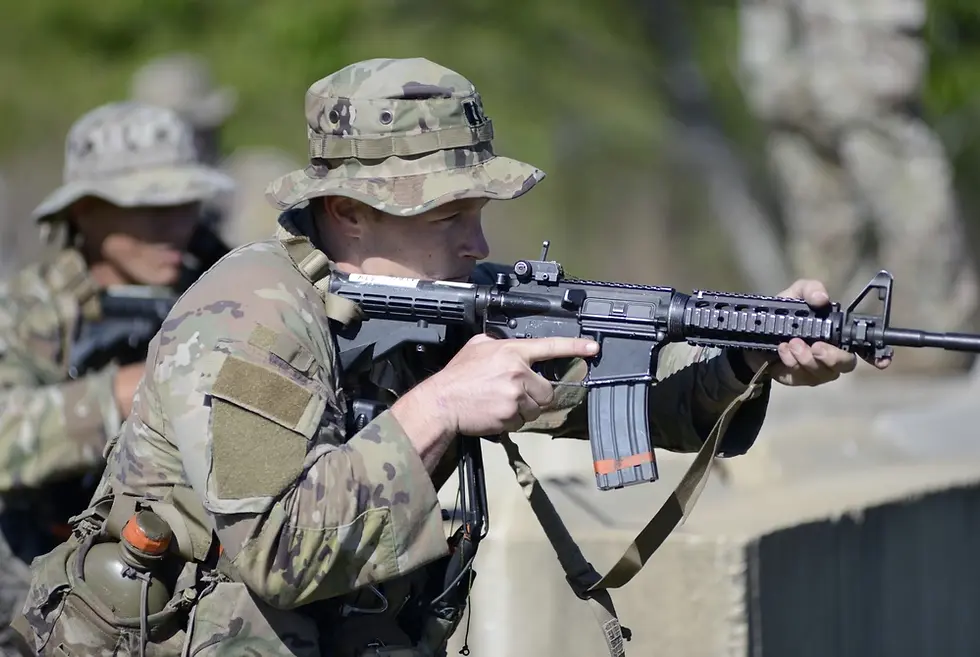
As context shifts, the optimal solution must be recalculated
3.1 Ecological Psychology: No Skill Without Context
Gibson's affordance theory (1979) and Newell's constraints model (1986) establish that motor learning emerges at the intersection of three constraint categories: the individual, the task, and the environment. The concept of context-independent skill is neurologically untenable: skill is always shaped within a specific environmental structure and becomes unreliable when separated from it.
A shooter achieves near-perfect grouping on the range under fixed lighting, at a known distance, against a static target array. That same shooter, in an operational environment darkness, moving target, ambiguous threat, adrenaline occupies an entirely different physiological and cognitive state. Range training reinforced the technical movement; it never reproduced the environmental structure within which that technique must function. This is why transfer breaks down.
Keegan (1976) provides the historical counterpart to this mechanism in his analysis of battle. Military history has systematically privileged the perspective of the command post while neglecting the real experience of the engaged operator — fear, ambiguity, the split-second decision. This neglect has been carried forward into training design.
3.2 The Constraints-Led Approach: The Illusion of the 'Correct Technique'

Davids and Araújo's (2010) Constraints-Led Approach (CLA) holds that optimal movement is not a pre-encoded template but is recalculated within prevailing constraints on each occasion. This directly challenges the 'correct stance correct technique' paradigm that has dominated firearms training for decades.
The Weaver stance (developed by Jack Weaver in the late 1950s) was taught as the universal correct stance for generations. When body armor became widespread, the anatomical advantages of the Isosceles stance became apparent and the paradigm shifted. The technique did not change; the constraint changed body armor entered the system as a new environmental constraint and the optimal solution was recalculated accordingly. There is no such thing as a universally correct technique; there is only what is optimal within a given set of constraints.
The practical training implication of the CLA is clear: the instructor's role is not to teach the correct movement but to create conditions under which the learner can independently recalculate the optimal movement as constraints change. This demands a shift from scenario memorization to principle internalization.
3.3 Recognition-Primed Decision: Tactics Precede Technique
Klein's Recognition-Primed Decision (RPD) model (1998) demonstrates that expert decision-making operates fundamentally differently from classical analytical processes. The expert recognizes first, then acts.

When an experienced operator enters an unfamiliar environment, they do not analyze the situation they recognize it. The pattern matching library built over years of varied experience generates a signal faster and more accurately than any analytical process could. Klein's research found that experts, in the overwhelming majority of cases, act on the first recognized pattern rather than comparing alternatives. Under stress, this mechanism becomes even more dominant: as analytical capacity narrows, recognition capacity takes over.
This model produces a critical implication: tactical assessment is completed before technical execution begins. The proposition that 'technique can exist independently of tactics' is therefore problematic; the tactical reading that determines which technique to apply, and when, is a prerequisite for technical execution.
4. FIELD OBSERVATION LITERATURE
4.1 Command Paralysis: The Collapse of Meaning

Weick (1993), in his analysis of the 1949 Mann Gulch disaster in Montana, developed the concept of the 'cosmological episode': the moment at which an individual's entire action framework collapses and the world becomes incomprehensible. Twelve of thirteen firefighters lost their lives.
The crew descended into the gulch with a clear scenario: contain the fire, maintain the evacuation route. When the fire accelerated unexpectedly, the command structure collapsed. Crew leader Wagner Dodge improvised an 'escape fire' burning away the grass ahead of the crew to create a survivable clearing and survived. The rest of the crew did not understand the decision, did not follow, and attempted to outrun the fire. All were overtaken by the flames. Dodge's method was not in any training manual; it was the product of in-the-moment adaptation. The crew, when the scenario failed, could not generate independent decisions.
Dixon (1976) identifies the common characteristics of commanders prone to command paralysis: cognitive rigidity, intolerance of ambiguity, authoritarian personality structure. His most unsettling finding is that high rank and extensive training provide no protection against this failure mode. Institutional hierarchy may, in fact, select for and reinforce precisely these characteristics.
4.2 Beneficial Deviation: The Paradox of Off-Procedure Success

Reason's (1990) human error taxonomy does not classify all off-procedure behavior as error. His concept of practical drift demonstrates that gradual deviation from written procedure normalizes under certain conditions. Off-procedure behavior is not inherently a failure; in some contexts, the procedure itself may have become misaligned with reality.
The 1986 Space Shuttle Challenger disaster is the canonical example of procedural compliance as system failure. Engineers reported the "O ring" problem; the hierarchy followed procedure and authorized launch. The rule book was observed in full; the system failed. Reason terms this 'latent failure': a systemic flaw embedded within the procedure itself, activated only under pressure. Identifying the cognitive characteristics that enable successful deviation and determining whether those characteristics can be developed through training constitutes one of the most critical open questions in operational training design.
4.3 Asymmetric Operational Superiority

Van Creveld (1985) demonstrates through extensive historical evidence that technical and logistical superiority does not guarantee operational success. The essence of the German Auftragstaktik (mission tactics) system is this: the commander communicates not what to do, but why it must be done. The manner of execution is delegated to the lowest level commander who can best assess the situation on the ground.
In World War II, German commanders exploited breakthroughs immediately upon their emergence without waiting for authorization from higher command. Allied commanders, by contrast, waited for coordination with central command and in that interval, the opportunity closed. Two armies equipped with comparable technical resources produced consistently different outcomes because of this single difference in command philosophy. Van Creveld's central finding is that centralized command systems create unavoidable delays in carrying information upward and decisions downward; this delay widens the gap between operational reality and command response.
Kilcullen (2009) extends this perspective to modern asymmetric conflict: the source of operational superiority is not technology but cognitive agility. Murray and Millett (1996) document institutional learning resistance: organizations, like individuals, can entrench wrong habits and resist the adaptation that changed conditions demand
5. AN ALTERNATIVE TRAINING MODEL

CQB shoot house training: building capacity under genuine stress conditions.
5.1 Stress Inoculation: Physiological Reality, Not Scenario Repetition
Grossman (2004) defines stress inoculation as follows: prior successful performance under genuine stress conditions facilitates future performance in similar circumstances. The mechanism operates not through scenario repetition but through the controlled induction of real physiological arousal.
When genuine adrenaline is triggered through uncertainty, time pressure, or performance observation and the operator successfully executes technique under those conditions, the brain registers a pattern: 'I am capable of functioning under these conditions.' Wellington captured this mechanism precisely: 'Nobody is afraid of doing what they know they are doing well.' The purpose of stress inoculation is exactly this: to build confidence not synthetically but through demonstrated competence under real pressure.
The fundamental distinction between stress inoculation and training scars is this: what is being reinforced is not a specific procedure but the capacity to function under pressure. As procedures evolve, the capacity endure
5.2 Constraint Manipulation: Principle Over Procedure
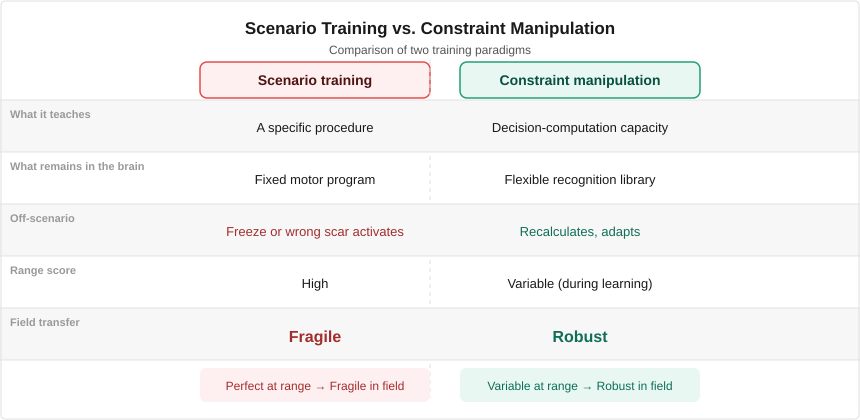
The practical implication of the CLA is that the instructor systematically manipulates constraints not the task itself. The learner is required to recalculate the optimal solution under each new configuration.
Traditional firearms training: fixed distance, fixed lighting, fixed target array, fixed time the learner memorizes the procedure. CLA-based training: distance varies, lighting varies, target number varies, time pressure varies. The learner must compute a new solution each time.
Upon completion, what the learner possesses is not a specific procedure but a computation capacity. When constraints shift in the field and they always do hat capacity activates. The procedure does not, because the procedure was never written for that scenario.
In this framework, the training output is not 'an operator who can execute the correct movement' but 'an operator who can recalculate the correct movement as constraints change.' The former is measured at the range; the latter makes the difference in the field.
5.3 Building a Situation Recognition Library
The training implication of the RPD model is that expert performance is built on recognition, not procedure. Recognition capacity develops through systematic exposure to varied and ambiguous situations not through scenario repetition.
Consider two operators. The first repeated the same scenario one thousand times and achieved mastery. The second encountered five hundred different, ambiguous, partially resolved scenarios some ended without resolution, some developed unexpectedly. When an off-scenario situation arises in the field, the first operator has no recognition library to draw from; they attempt to fit the situation into known categories and fail. The second may not recognize the situation exactly, but has processed analogous patterns and developed the capacity to function under ambiguity.
6. CONCLUSION
The central argument of this paper is that the primary constraint in operational training is not technical proficiency but cognitive flexibility. Grossman and Siddle's physiological research has established that procedural memory becomes unreliable under high stress and that skills acquired in decontextualized settings fail to transfer. The work of Weick,
Dixon, and Van Creveld has documented how this dynamic extends from the individual level to the organizational level through historical evidence. Klein's RPD model and Davids' CLA account for the cognitive mechanism underlying transfer failure.
The practical conclusion is unambiguous: scenario-based training reinforces procedures; it does not build cognitive flexibility. What is required instead is a training paradigm centered on constraint manipulation, genuine physiological stress inoculation, and the systematic construction of a situation recognition library.
A final qualification: this paper does not argue that technical proficiency is irrelevant. A sound technical foundation is a prerequisite for cognitive flexibility training. But a prerequisite must not be confused with a destination. The dictum Grossman cites captures this precisely: 'In combat, you do not rise to the occasion you sink to the level of your training.' The problem is this: most training sets that level far below operational reality.
Author
Dr. Selcuk Aksak
Shooting Sport Instructor & Coach
IDPA Certified Safety Officer / Licensed Gunsmith
Burkut Academy, Istanbul, Turkey
REFERENCES
Artwohl, A., & Christensen, L. W. (2002). Deadly force encounters (2nd ed.). Boulder, CO: Paladin Press.
Davids, K., & Araújo, D. (2010). The concept of 'Organismic Asymmetry' in sport science. Journal of Science and Medicine in Sport, 13(6), 633-640.
Dixon, N. F. (1976). On the psychology of military incompetence. London: Jonathan Cape.
Gibson, J. J. (1979). The ecological approach to visual perception. Boston: Houghton Mifflin.
Grossman, D., & Christensen, L. W. (2004). On combat: The psychology and physiology of deadly conflict in war and in peace. PPCT Research Publications.
Keegan, J. (1976). The face of battle. London: Jonathan Cape.
Kilcullen, D. (2009). The accidental guerrilla: Fighting small wars in the midst of a big one. Oxford: Oxford University Press.
Klein, G. A. (1998). Sources of power: How people make decisions. Cambridge, MA: MIT Press.
Murray, W., & Millett, A. R. (1996). Military innovation in the interwar period. Cambridge: Cambridge University Press.
Newell, K. M. (1986). Constraints on the development of coordination. In M. G. Wade & H. T. A. Whiting (Eds.), Motor development in children: Aspects of coordination and control (pp. 341-360). Dordrecht: Martinus Nijhoff.
Reason, J. (1990). Human error. Cambridge: Cambridge University Press.
Siddle, B. K. (1995). Sharpening the warrior's edge: The psychology and science of training. Millstadt, IL: PPCT Research Publications.
Van Creveld, M. (1985). Command in war. Cambridge, MA: Harvard University Press.
Weick, K. E. (1993). The collapse of sensemaking in organizations: The Mann Gulch disaster. Administrative Science Quarterly, 38(4), 628-652.


Comments